Meet the Meteorologist
What's your favorite weather phenomena?
What got you interested in the weather?
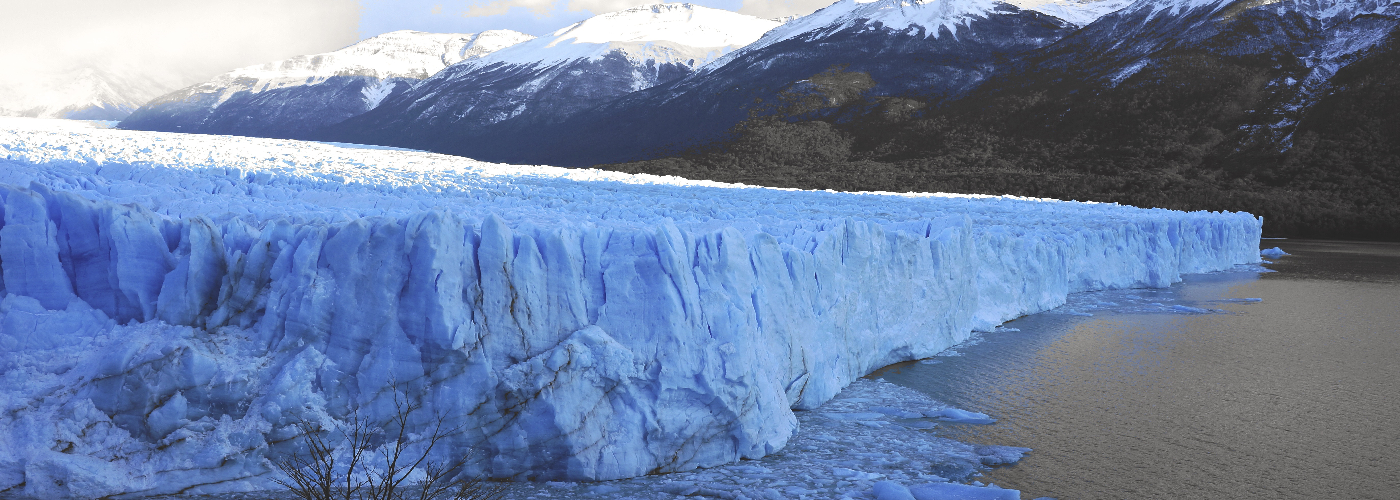

During the Cryogenian Period, about 720–635 million years ago, Earth endured its most extreme glaciations, a time when ice sheets extended toward the tropics and many scientists envisioned the planet largely locked in a static, frozen state. New work from the University of Southampton complicates that picture. Detailed study of finely layered sediments, called varves, on the Garvellach Islands, deposited during the Sturtian glaciation, reveals a year-by-year archive in which rhythmic variations persist across annual, multi-year, and decadal bands.
Researchers counted and measured roughly 2,600 annual layers in the Port Askaig Formation and used statistical analysis to extract repeating signals in layer thicknesses. Microscopy and sedimentology indicate deposition beneath an ice cover in calm, deep water, with seasonal freeze–thaw cycles driving annual layering. Superimposed on that seasonal signal the team found cycles resembling modern climate modes, including El-Nino-like oscillations and solar-period signals. These patterns suggest coupled atmosphere–ocean variability was active, at least episodically, during this so-called Snowball Earth.
Climate model experiments conducted alongside the field work show how this is possible. If the ocean were entirely sealed by thick ice, coupled modes would be suppressed; but simulations indicate that if modest regions of open water existed, on the order of about 15 percent of the surface, then evaporation and air–sea exchange could restart familiar climate rhythms. In other words, brief slushball or waterbelt states with tropical or regional open seas could produce the varve signals observed.
The study does not claim Snowball Earth was broadly dynamic throughout its duration; rather, the varves record a temporary disturbance embedded within an otherwise stable, frigid background. The finding matters because it reveals the climate system’s capacity for oscillation even under extreme forcing, and hints that other planets and moons that appear globally hostile based on overall conditions might nevertheless harbor dynamic subregions that sustain cyclic processes important for chemistry and/or life.

 Paul Trambley
 Derek Heit
 Jennifer Wojcicki
 Laura Lockwood
 Ray Miller