Meet the Meteorologist
What's your favorite weather phenomena?
What got you interested in the weather?
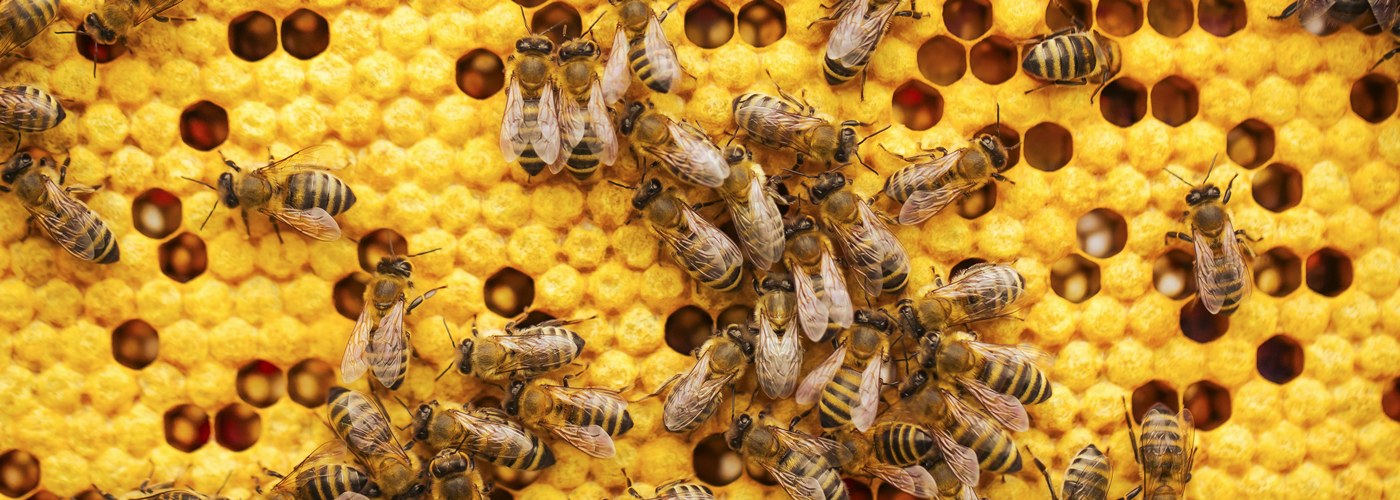

Honey bees have an impressive ability
to regulate temperatures inside their hives, but new research
suggests that extreme heat can push this natural cooling system
beyond its limits. A study published in Ecological and
Evolutionary Physiology found that prolonged heat waves can
disrupt hive temperature control and contribute to declining colony
populations.
Researchers monitored nine honey bee colonies in
Arizona during a three-month period when temperatures frequently
exceeded 104°F (40°C). Although the bees kept average brood
temperatures near the ideal 93–97°F (34–36°C) range,
temperatures fluctuated substantially throughout the day. Bees
developing near the center of the brood experienced several hours
outside the optimal range, while those near the edges spent nearly
eight hours each day exposed to potentially stressful
temperatures.
The effects were particularly pronounced in
smaller colonies. Temperature fluctuations near the outer brood areas
reached about 20°F (11°C) in the smallest hives, compared with
roughly 11°F (6°C ) in the largest colonies. Larger colonies have
more workers available to carry water, fan their wings, and ventilate
the hive, giving them a greater capacity to control heat.
The
researchers found that colonies exposed to higher peak temperatures
and greater internal temperature swings experienced population
declines. Humidity could make the problem worse because moist air
reduces the effectiveness of evaporative cooling, the primary
mechanism bees use to remove heat.
As climate change increases
the frequency and intensity of heat waves, beekeepers may need to
provide supplemental water, shade hives, improve insulation and hive
design, and ensure colonies have access to high-quality forage.
Protecting honey bees from extreme heat could become increasingly
important not only for beekeeping, but also for agriculture, where
pollination services support many important crops.






 Paul Trambley
 Derek Heit
 Jennifer Wojcicki
 Laura Lockwood
 Ray Miller